


Food processingBrief
In Greece, eight robots sort 100,000 peaches an hour, but gripping peeled, slippery fruit was the hardest part
At Agrophoenix's fruit processing plant in Greece, the STAQ inspection system from Dutch start-up QING has finished its first harvest season, Robotics & Automation News reports.
In each cell, a camera inspects every peach half in a few milliseconds. The robot then removes the halves that fail inspection and places them on belts on either side of the main conveyor. The other halves continue on to the next stage of processing.
In season, the eight STAQ cells process 15 tonnes of peaches an hour, or about 100,000 fruits, all cut in half.
Lazaros Ioannidis, partner and project manager at Agrophoenix, says the plant works by weight rather than by number of fruits. According to him, a peach weighs about 150 g, which comes to roughly 200,000 halves an hour, of which 3,600 may be rejected.
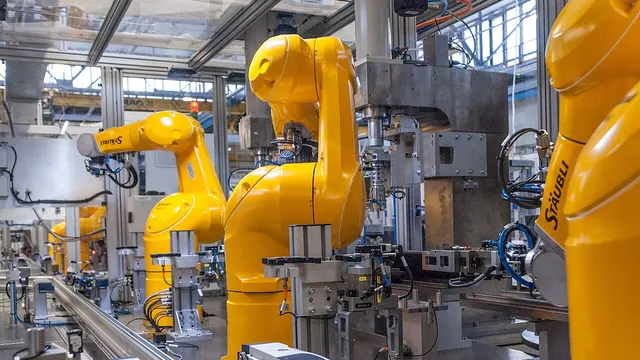
The robots are Stäubli TS2-80 SCARA units in the HE version, designed to withstand frequent washdowns. According to Lazaros Ioannidis, the lines stop for 20 minutes every four hours on production days for an automatic clean.
Development took two seasons instead of one. According to the document, the delay came neither from artificial intelligence, nor from the software, nor from the robots, but from gripping. The team had to find the right material to touch peeled, slippery peaches.
Source
- Robotics & Automation News · roboticsandautomationnews.com