HumanoidsBrief
NEURA unveils its 4NE1 Gen 4 humanoid, 20% lighter, and opens a centre in Munich with TUM
The German manufacturer and the Technical University of Munich opened a joint robot research and training centre near Munich airport on 22 October 2026.
According to the NEURA Robotics blog, the TUM RoboGym is based at the LabCampus and covers more than 2,300 square metres. It was built with TUM's robotics institute, MIRMI.
The joint project is planned for an initial three years. The partners are investing about 17 million euros, of which about 11 million comes from NEURA.
According to NEURA, partners have been training robots there on real tasks since September. Companies from more than ten sectors are taking part, including automotive, pharmaceuticals, medical technology, packaging, logistics, agriculture and care.
For the occasion, the manufacturer is presenting the new generation of its humanoid, the 4NE1 Gen 4. It is slimmer, covered in a textile skin and 20% lighter than the previous generation. NEURA says it is preparing it for series production.
Update, 22 October: According to NEURA, the tasks trained on site range from handling cartons and filling bottles to loading and unloading wooden parts. The 4NE1 Gen 4 runs on Neuron AI, the AI model developed by NEURA, which translates what the robot perceives directly into movement. The manufacturer says the humanoid is also being shown at the NVIDIA GTC conference in Berlin and is already working in the NEURA Gyms.
Update, 22 October: According to NEURA Robotics, the Munich centre is the first in a planned international network of NEURA Gyms. The manufacturer says the 4NE1 Gen 4 gets improved hands to grip objects more precisely. The humanoid also has what NEURA calls “Smart Limbs”. According to NEURA, reflexes are built into each limb, which can therefore react on its own.
Update, 23 October: At the RoboGym, training data comes from three sources. The robots record their movements, their physical contacts and the results of their actions. Human operators demonstrate the tasks using sensor suits, motion capture and teleoperationControl of a robot at a distance by a human operator, live, using a dedicated interface.Read the glossary entry. Simulation then varies the tasks and conditions, before the skills are tested on real robots. This data passes through Neuraverse, NEURA's platform. According to the company, a skill learned by one connected robot can be passed on to other robots through this platform.
Sources
- NEURA Robotics (blog) · neura-robotics.com
- Robotics Tomorrow · roboticstomorrow.com
- NEURA Robotics (blog, German) · neura-robotics.com
- Humanoid.guide · humanoid.guide
Also worth reading in Humanoids
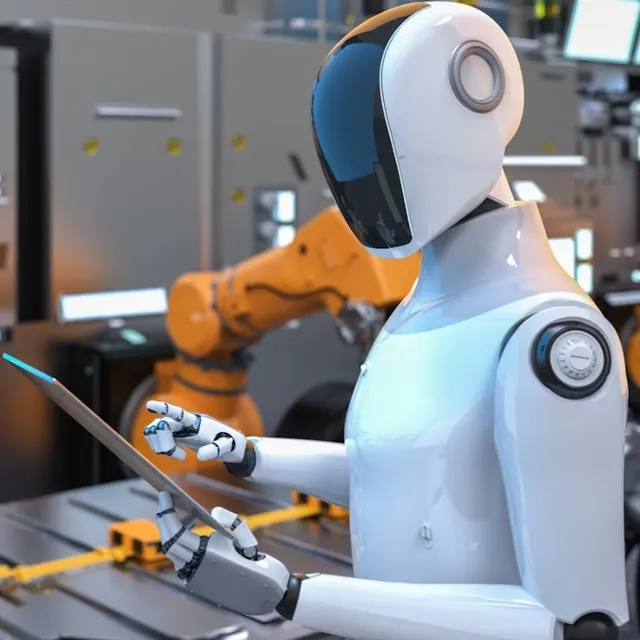
 Illustration, not a photo of the robot
What next