AI and robotsBrief
Nvidia has OpenAI's AI build its robots' virtual training from a simple prompt
A developer describes in plain language what a robot should learn, and an artificial intelligence program builds the virtual training ground itself. Nvidia has just presented the method, according to the Korean publication Robot Newspaper.
Until now, teaching a robot a new task required knowledge of robotics, physics simulation, machine learning and programming all at once. You also had to place the robot and the objects in a virtual scene yourself, then set the gravity, friction and contacts.
In Nvidia's demonstration, GPT-6 Astra does not control the robot's movements. It acts as an assistant that chains the steps together: it links the tools needed for training and keeps the work moving.
The system can also start from movements recorded on a real robot. It reproduces them in simulation and adjusts the physics settings, so the machine can practise again and again under varied conditions.
According to the video published by Nvidia, the assistant relies mainly on two software tools: Isaac Lab, Nvidia's tool for teaching the robot its movements and improving them, and the Newton physics engine, which reproduces contacts and friction.
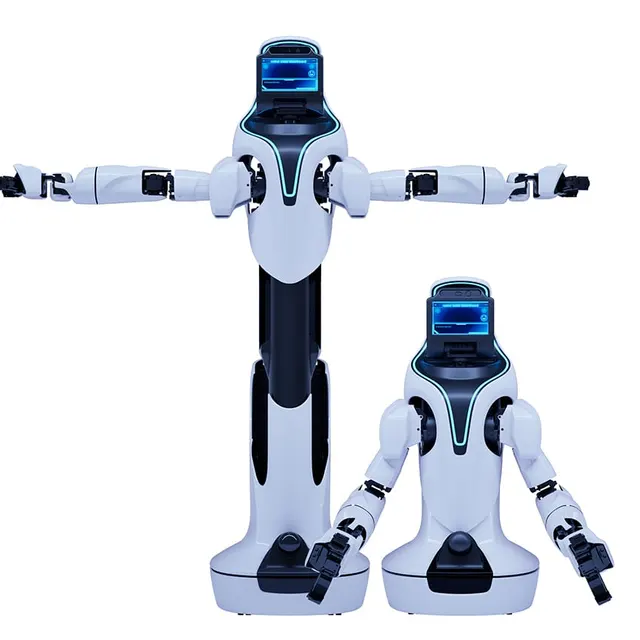
To show the learned movements, Nvidia used a humanoid robotA robot whose form follows that of the human body, with a torso, two arms, a head and most often two legs.Read the glossary entry from Agile Robots, the Agile ONE SN.
Source
- 로봇신문 Robot Newspaper · irobotnews.com
Also worth reading
 Illustration, not a photo of the robot
- Illustration, not a photo of the robot
What next