LogisticsBrief
At Zalando, AI-driven robots now handle returned fashion items on their own
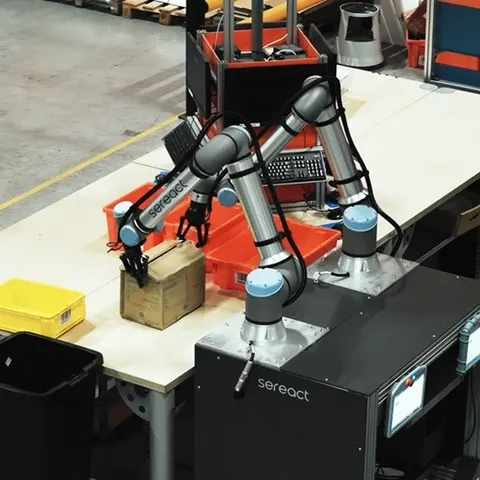
In Berlin, Teradyne Robotics, the parent company of Universal Robots, has formalised a partnership with Sereact, which describes itself as a pioneer of physical AI for robotics.
According to the two companies, hundreds of UR robots built into dual-arm systems have already been delivered to customer sites in service in Europe.
The deployments are run with CEVA Logistics for Zalando. At Zalando's logistics centres in Greven, Germany, and Świebodzin, Poland, the robots now handle returned fashion items on their own. The press release presents this as the first phase of a Europe-wide returns automation project.
The partnership, announced by Universal Robots on its website on 21 October 2026, targets retail, logistics and industry. Sereact's AI platform, Cortex, controls the Universal Robots arms.
During the NVIDIA GTC Berlin show, Cortex is running two UR12e-1300 arms on the Nvidia stand. The demonstration reproduces a returns-handling application already in service in logistics centres.
Sereact opened a US headquarters in Boston this summer to offer the joint solution in Nord America as well.
Update of 25 October: According to The Robot Report, Ralf Gulde, co-founder and CEO of Sereact, says all applications (returns, restocking, kitting) run on the same Cortex model. He says a single “brain” controls all the robots, with no retraining for each new item or task, and that what one robot learns benefits all the others. Ralf Gulde also makes a regulatory argument. By quickly restoring returned items for resale, the solution would help retailers comply with European Union rules that ban destroying or landfilling returned goods. On site, Cortex runs on an Nvidia Jetson Thor module installed in the robot cell, where processing has to keep up with the pace of the line. A Nvidia DGX Spark workstation is used for development, validation and site-wide model updates.
Update of 27 October: According to the Italian site AI News, the two companies share the roles. Sereact provides the software, and Universal Robots supplies the hardware and an installed base of more than 100,000 industrial robots. Jacob Pascual Pape, commercial director of Teradyne Robotics, says the technology has moved beyond the demonstration and pilot stage. Teradyne is also contributing SimReady OpenUSD simulation assets for UR and MiR robots to the Hugging Face library. According to AI News, developers can thus reuse these robot models in simulation with less preparation work.
Sources
- Universal Robots (news center) · universal-robots.com
- The Robot Report · therobotreport.com
- AI News (Robotica) · ainews.it
Also worth reading in Logistics
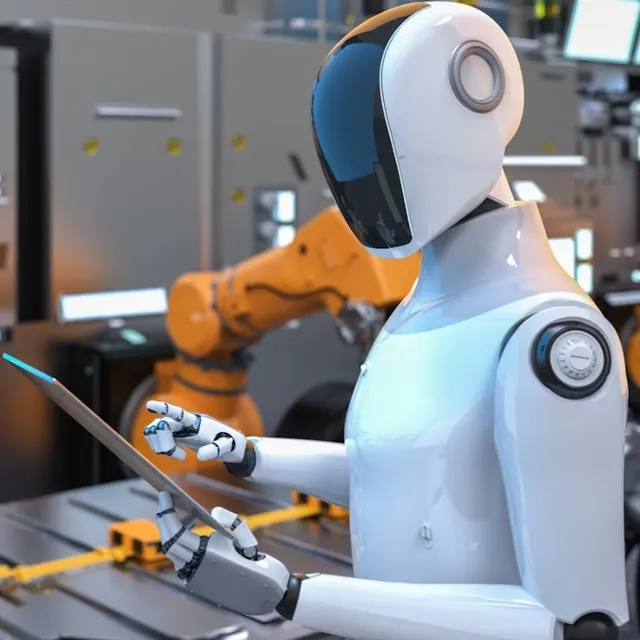
 Illustration, not a photo of the robot
What next