


HumanoidsBrief
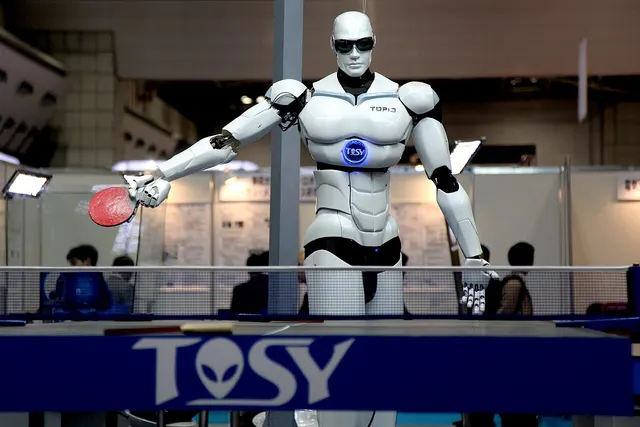
Humanoid plays full 11-point table tennis games and chooses where to return the ball
In a paper published on arXiv, a team of researchers led by Fanrong Dong describes a humanoid that chooses for itself where to return the ball.
On a real robot, the system played full 11-point games against a human who plays for fun. According to the authors, rallies lasted several shots, with both forehand and backhand returns.
The researchers separate two skills: hitting the ball well, and deciding where to send it. The point where the ball should bounce on the table links the two.
The robot first learned to hit by playing against a virtual opponent, rather than only against balls fired in a pattern set in advance. According to the paper, this training improves accuracy and the number of valid returns.
The learned strategy wins 89%, 82% and 73% of points against three simpler tactics: aiming at the centre, aiming at random, or aiming away from the opponent, the authors say.
The robot does not always aim for the same “good” spots. According to the team, it adapts its shots to the opponent's position and to where it sent the ball just before.
Source
- arXiv (cs.RO, robotics) · arxiv.org