



PrivacyGuides
Lidar or camera: what your robot vacuum sees of your home, and what it means for your privacy
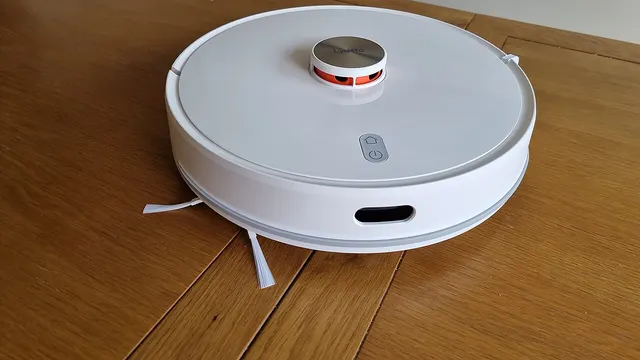
A robot vacuum can find its way around with LiDAR, a camera or both, and researchers and investigations have shown risks with each. This guide sets out what manufacturers say, what has been documented by researchers and journalists, and what nobody has yet documented.
How iRobot describes its robots' navigation
According to iRobot's press releases, the PrecisionVision navigation on the Roomba j7+ and the Roomba Combo j9+ recognises objects to avoid. The Roomba i7+ is presented with iAdapt 3.0 navigation and vSLAM, according to an iRobot press release from 2018.
What the LiDAR Roomba pages say
The Roomba Plus 515 Combo "Navigates with ClearView LiDAR", and its page mentions no camera. It states "Your privacy is our priority" and says iRobot uses encryption to protect data.
For the Roomba Max 875 Combo, iRobot writes that its "ClearView Pro Dual Line LiDAR creates detailed 3D maps" and that PrecisionVision AI "recognizes and avoids 300+ common objects". The page does not say explicitly which cameras the robot has. iRobot says it applies "the highest standards of data encryption" and lets owners delete their data when passing the robot on to someone else.
According to iRobot's press release, both units of the Roomba Duo, a prototype shown at IFA 2026, are "equipped with ClearView Pro dual-line LiDAR". Only the main unit carries "top-mounted AI cameras". The press release does not address privacy.
When images leave the robot: the 2022 investigation
In an investigation published on 19 December 2022, MIT Technology Review reports that images taken between June and November 2020 by development versions of Roomba J7 series robots ended up in private social media groups. The publication obtained 15 screenshots.
According to the publication, the images were posted by Venezuelan workers subcontracted through Scale AI, a data annotation company. iRobot said the images had been "shared in violation of a written non-disclosure agreement" by an annotation contractor, and ended its relationship with them.
LidarPhone: a LiDAR repurposed to pick up sound
Presented at the ACM SenSys 2020 conference by Sriram Sami, Yimin Dai, Sean Rui Xiang Tan, Nirupam Roy and Jun Han, the LidarPhone study was carried out on a modified robot vacuum. According to the University of Maryland, the researchers controlled its laser and sent the measured data over Wi-Fi to computers, without disrupting its navigation. An attack of this kind requires taking control of the vacuum, which the researchers had modified.
According to the university's write-up, the system recognised spoken digits with 90% accuracy, and identified TV shows with more than 90% accuracy from one minute of recording. The tests used everyday objects placed near the sound source, such as a bin or a cardboard box. The university's write-up names no brand or model. AdGuard reports somewhat different results: speech and music recorded with more than 90% accuracy on a Xiaomi Roborock vacuum, without describing the conditions of the attack.
Hacking connected robots: the Ecovacs case
According to Kaspersky, researchers Dennis Giese and Braelynn Luedtke presented their work on Ecovacs robots at DEF CON 32. According to them, as reported by Kaspersky, "a potential hacker could access the feed from the robot's built-in camera and microphone". They reportedly warned Ecovacs and got no reply, and the company reportedly tried to fix some of the flaws "with little success", Kaspersky writes.
Also according to Kaspersky, in Minnesota the owner of a Deebot X2 saw someone gain access to their robot's video feed and remote control. Kaspersky advises always installing firmware updates.
What we do not know, and what to check with the manufacturer
The sources consulted on 9 October 2026 do not document which images or maps leave the robot for the manufacturer's cloud, or how long they stay there. Nor do they say whether the Roomba models with LiDAR and cameras have a physical shutter or a camera switch. They contain no independent test comparing the privacy of two models.
For LidarPhone, no source quantifies the real risk to a household. Before buying, ask the manufacturer about these points: what goes to the cloud, how long it is kept, whether the camera has a physical cover, and what its update policy is.
Sources
- Université du Maryland, présentation de l’étude LidarPhone · cs.umd.edu
- MIT Technology Review, enquête du 19 décembre 2022 · technologyreview.com
- Kaspersky, article du 9 janvier 2025 sur les robots Ecovacs piratés · kaspersky.com
- iRobot, communiqué du 4 septembre 2026 sur le Roomba Duo · media.irobot.com
- iRobot, page du Roomba Plus 515 Combo · irobot.com
- iRobot, page du Roomba Max 875 Combo · irobot.com
- AdGuard, article du 3 janvier 2023 · adguard.com

.jpg)