HumanoidsBrief
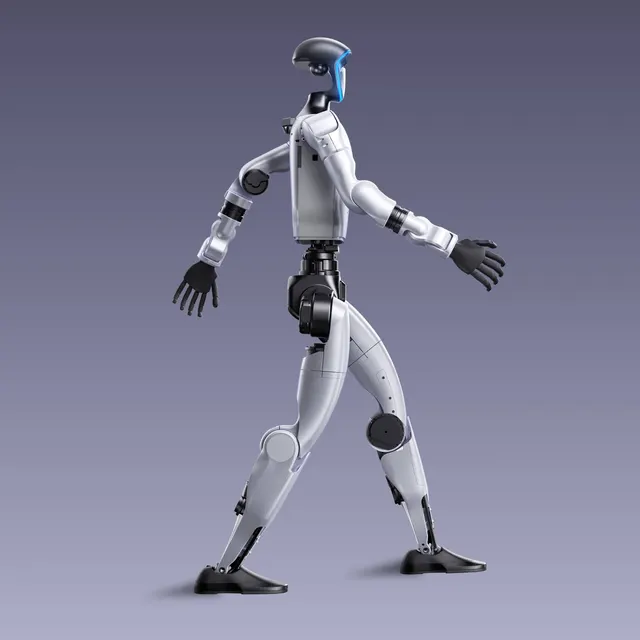
G1 humanoid copies a painting, run by GPT-6 according to Unitree's founder, and shares gain 20%
Unitree showed the demonstration at a physical AI conference in Hangzhou, and its shares then jumped on the Bourse, reports the Chinese site 快科技 MyDrivers.
On stage, Wang Xingxing, founder of Unitree, showed a G1 humanoid copying a real painting. According to the presentation, the robot was controlled by GPT-6, OpenAI's model.
According to Wang Xingxing, GPT-6 took control of the robot with no prior training and no planning algorithm. He says the model could even tell the G1 to change colour and clean the brushes.
The demonstration took place on 22 October at the Hangzhou international exhibition centre, during the 2026 World Physical AI Conference, held alongside the Unitree partners' conference.
The next day, Unitree shares gained 20% on the Bourse and stood at 624 yuan when the site published its article. From its post-IPO peak, the company's value had fallen by nearly 60%.
The founder considers current production capacity “far from sufficient” for true mass adoption. According to him, Unitree now produces a few tens of thousands of robots a year.
Update of 23 October: according to the Spanish site Xataka, Wang Xingxing also presented a “self-evolving” robot development system at the conference. He has made it a priority for the company. Wang describes a closed loop. AI agents search for research papers, then write the robot control code themselves, which is then tested and trained in simulation. The founder hopes Unitree's robots will start entering homes by the end of the year or next year. Xataka openly says it doubts this.
Update of 25 October: the founder has also brought his timeline forward. According to Bloomberg, he now expects robots to complete 80% of tasks requested by voice as early as 2028, in factories and at home. In August, at the World Robot Conference in Beijing, he still estimated that mass use in factories and homes was 10 years away.
Sources
- 快科技 MyDrivers · news.mydrivers.com
- Xataka (Robots) · xataka.com
- Humanoid.guide · humanoid.guide